Best Forex Brokers in UAE & Dubai 2026
Best Forex Brokers in UAE & Dubai 2026. An independent, fact-checked look at Vantage Markets for traders evaluating this broker.
Reviewed using our forex & CFD broker review methodology
There's no single "best" forex broker for every trader in the UAE, because the right answer depends on which regulatory perimeter actually applies to you: onshore mainland UAE, the Dubai International Financial Centre (DIFC), or Abu Dhabi Global Market (ADGM). Each sits under a different regulator, with different scope and different investor protections. Before comparing spreads, platforms, or minimum deposits, the more useful first step is confirming which entity of a broker's group — if any — is authorized to service you, and under which license. This guide walks through that verification process first, then compares practical factors like cost, platforms, and funding across brokers commonly researched by UAE-based traders.
The UAE Forex Broker Landscape in 2026
Most "best forex broker" lists written for a global audience simply are not built for UAE readers, because they compare brand names rather than the specific legal entity that would actually hold your funds and execute your trades. A broker's global marketing site, its UAE-facing page, and its DIFC or ADGM entity (if one exists) can be three different legal structures with three different licenses, three different complaint procedures, and sometimes three different product ranges.
This matters more in the UAE than in most single-regulator markets because the country runs three parallel regulatory perimeters rather than one:
- Onshore mainland UAE — regulated activity in this perimeter falls under the jurisdiction of federal authorities overseeing securities and commodities markets.
- DIFC (Dubai) — a financial free zone with its own independent regulator, the Dubai Financial Services Authority (DFSA), which maintains a public register of authorized firms.
- ADGM (Abu Dhabi) — a separate financial free zone regulated by the Financial Services Regulatory Authority (FSRA), which operates its own financial services register.
A broker can be legitimately licensed in one of these perimeters and have no authorization at all in the other two. A broker can also hold well-known international licenses (FCA, ASIC, CySEC, FSCA, and similar) without holding any UAE-specific authorization at all. None of these situations are inherently "good" or "bad" — they're just different, and the practical consequences (which regulator you could complain to, what fund-segregation rules apply, what leverage limits apply) differ accordingly. The rest of this guide is built around resolving that ambiguity before you compare features.
UAE Regulators Explained: Onshore, DIFC, and ADGM
Onshore mainland UAE. Trading and investment activity conducted outside the two financial free zones falls under federal regulatory oversight. Regulator names, mandates, and organizational structures can change over time. Before relying on any specific regulator name you encounter online, verify the current official name and scope directly on the federal authority's own website.
DIFC and the DFSA. The Dubai International Financial Centre is a financial free zone with its own common-law-based legal framework, separate from onshore UAE civil law. Firms conducting regulated financial services within DIFC are authorized and supervised by the Dubai Financial Services Authority (DFSA), which maintains a public register of authorized firms. A firm being "in Dubai" is not the same as being "DIFC-regulated" — plenty of businesses operate in Dubai's mainland or other free zones without any DFSA authorization at all.
ADGM and the FSRA. Abu Dhabi Global Market is Abu Dhabi's equivalent financial free zone, regulated by the Financial Services Regulatory Authority (FSRA). Like DIFC, ADGM operates its own legal framework distinct from onshore UAE law, and the FSRA maintains its own separate financial services register.
The practical takeaway: these three perimeters are not interchangeable, and none of them is automatically satisfied by a broker holding licenses from regulators elsewhere in the world (FCA, ASIC, CySEC, FSCA, and so on). International regulation and UAE-specific authorization are separate questions, and a broker's marketing page conflating the two is a signal to verify independently rather than take the claim at face value.
How to verify a broker's authorization yourself
Rather than relying on a broker's own claims, run this check before funding an account:
- Identify the exact legal entity name the broker states will hold your account (not the parent brand name) — this is usually in the account-opening terms or a "legal entities" page.
- Search that exact entity name on the register of the regulator it claims to hold: the federal regulator's approved-firms list, the DFSA public register, or the FSRA/ADGM financial services register.
- Confirm the license or authorization is current, not expired, suspended, or withdrawn.
- Confirm the license actually covers the activity you want (e.g., "dealing in investments as principal" for CFDs/forex), since some licenses are limited in scope.
- Treat a broker's own "regulated by X" banner as a starting point, not proof — the register entry is the authority.
If you can't find a matching entry, don't assume it's an oversight. Ask the broker directly which entity and license number applies to UAE residents, in writing, before depositing.
Top Forex Brokers for UAE Residents
The profiles below are organized by servicing considerations, not ranked as a "top 10." Entity structures and regional availability change, and none of the UAE/DIFC/ADGM authorization statuses below have been independently confirmed for this article — each is flagged accordingly. Run the verification steps above before opening any account.
Disclosure: This page may contain affiliate links. We may earn a commission if you open an account through our links, at no extra cost to you.
Vantage Markets
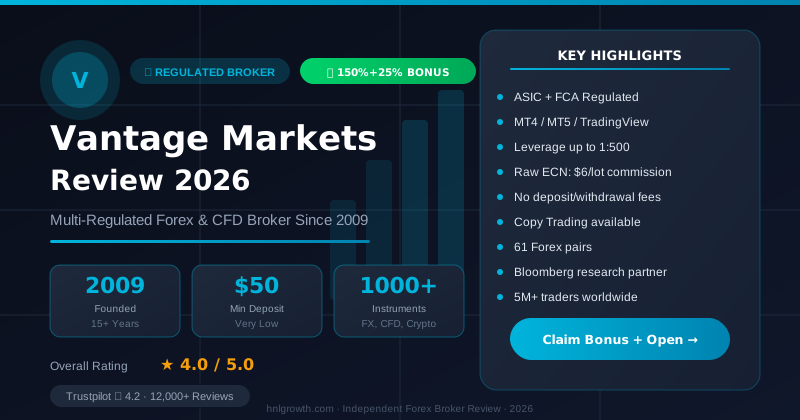
Vantage is a multi-asset CFD and spread betting group founded in 2009, reporting over 5 million registered users group-wide. As disclosed on its own site, the group's international regulatory footprint includes coverage across its various entities. That list does not, on its own, establish a DIFC, ADGM, or onshore UAE authorization — if a specific Vantage entity currently services UAE residents under one of those licenses, that would need to be confirmed on Vantage's own regional page and cross-checked against the relevant register, not assumed from its general international disclosures.
On platforms and account structure, Vantage offers MT4 and MT5, TradingView charting integration, a proprietary web trading platform, and a mobile app. Live account tiers include a Standard STP account (spreads from 1.1 pips, no separate commission), a Raw ECN account (spreads from 0.0 pips plus a per-side commission), and a Pro ECN account (spreads from 0.0 pips, a lower per-side commission, and a higher minimum deposit), alongside demo accounts. Standard and Raw ECN accounts carry a published minimum deposit of $50. These figures reflect the group's general published account structure and are not UAE-specific; confirm which account types and terms apply under the entity that actually onboards you.
Not ideal for: traders who need confirmed onshore federal, DFSA, or FSRA authorization as a hard requirement and are not willing to verify entity details before opening an account.
Confirm current UAE/DIFC/ADGM availability and the applicable entity and terms directly on Vantage Markets' website before opening an account. Compare Vantage account types.
AvaTrade
AvaTrade is a multi-asset broker commonly associated with MT4/MT5 access, a proprietary platform, and copy-trading integrations. We did not independently verify AvaTrade's current UAE, DIFC, or ADGM authorization status for this article. Check AvaTrade's regional page and the relevant register before proceeding.
Exness
Exness is a broker commonly discussed in retail forex communities for its account-type variety and historically flexible leverage offerings on certain account types. Its current UAE-specific authorization status was not independently verified here — confirm directly with Exness and the applicable register.
IC Markets
IC Markets is commonly associated with ECN-style raw pricing and MT4/MT5/cTrader access, popular among cost-sensitive and higher-frequency traders. UAE/DIFC/ADGM authorization was not confirmed for this article; verify before funding.
IG Group
IG is one of the longer-established, publicly listed multi-asset brokers, generally known for breadth of markets and research tools. Whether a specific IG entity is authorized for UAE residents under DFSA, FSRA, or onshore rules was not confirmed here — check IG's own regional disclosures and the relevant register.
Pepperstone
Pepperstone is commonly associated with raw-spread accounts and cTrader alongside MT4/MT5. As with the others above, we have not independently confirmed its current UAE-specific authorization status; verify directly.
XTB
XTB is commonly known for its proprietary trading platform and a European retail client base. UAE/DIFC/ADGM status was not confirmed in this review — check XTB's regional page and register status before applying.
Broker snapshot
| Broker | Commonly known for | UAE/DIFC/ADGM status confirmed here | Where to verify |
|---|---|---|---|
| Vantage Markets | Multi-account structure (Standard/Raw/Pro ECN), MT4/MT5/TradingView | Not confirmed | Vantage's regional page + applicable register |
| AvaTrade | MT4/MT5, proprietary app, copy trading | Not confirmed | AvaTrade's regional page + applicable register |
| Exness | Account-type variety, flexible leverage tiers | Not confirmed | Exness's regional page + applicable register |
| IC Markets | ECN/raw pricing, MT4/MT5/cTrader | Not confirmed | IC Markets' regional page + applicable register |
| IG Group | Broad market access, listed company | Not confirmed | IG's regional page + applicable register |
| Pepperstone | Raw spreads, cTrader | Not confirmed | Pepperstone's regional page + applicable register |
| XTB | Proprietary platform | Not confirmed | XTB's regional page + applicable register |
Trading Costs for UAE Traders
Forex cost structures generally fall into two models: a spread-only model, where the broker's fee is built into a wider quoted spread on pairs like EUR/USD, USD/JPY, and GBP/USD; or a raw/ECN model, where spreads are compressed close to the interbank rate and a separate per-lot or per-side commission is charged instead. Vantage, for example, publishes this structure explicitly across its Standard STP (spread-only, from 1.1 pips), Raw ECN (from 0.0 pips plus commission), and Pro ECN (from 0.0 pips, lower commission, higher minimum deposit) tiers.
Actual spreads on any account, at any broker, move with liquidity and volatility — they widen around news events, at rollover, and in thin holiday trading, and narrow during the London/New York overlap. Treat any specific pip figure you see quoted, including the ones above, as indicative of the account structure rather than a guaranteed live price. Before choosing an account type, check the broker's current live pricing page and any published minimum deposit for the entity that would actually open your account, since minimums and commission rates can differ by entity even within the same broader group.
Platforms Available to UAE Trading Accounts
MetaTrader 4 and MetaTrader 5 remain the most widely supported platforms across the industry, and most brokers researched for this guide are generally understood to offer one or both. Some add cTrader, TradingView integration, or a proprietary web and mobile platform on top. Vantage, for instance, offers MT4, MT5, TradingView charting, a proprietary web trading platform, and a mobile app.
The point worth repeating here: platform access can differ by entity, not just by brand. A broker's global site listing "MT4, MT5, cTrader" doesn't guarantee all three are available to the specific entity servicing UAE clients, or that every account type within that entity supports every platform. Confirm platform availability on the account-opening page for your specific entity, not the general marketing page.
Funding Your UAE Trading Account
UAE residents typically have access to some combination of local or international bank transfer, debit/credit card funding, and e-wallet options, depending on the broker and the specific entity handling the account. Processing times for deposits and, especially, withdrawals vary by method and by broker, and none of the figures sometimes quoted online (same-day, 24 hours, "instant") should be treated as guaranteed — banking cut-off times, KYC status, and the payment provider used can all affect timing.
Before funding an account, confirm directly with the broker:
- Which funding methods are currently available to UAE-registered accounts specifically.
- Whether there's a minimum deposit tied to your chosen account type.
- Whether deposits and withdrawals must use the same method and be in the account holder's name (a common anti-fraud requirement across the industry).
- Any currency conversion fees if your funding source isn't in the account's base currency.
- Typical withdrawal processing windows, in writing, rather than relying on general marketing claims.
Dubai-Specific Considerations
Traders based in Dubai specifically will often see brokers highlight a DIFC presence as a trust signal. A DIFC office or DIFC-licensed entity is a genuine differentiator worth noting, but it's not automatically the entity that opens your account — some brands maintain a DIFC presence for institutional or wholesale business while onboarding retail clients through an entirely different offshore entity. Ask specifically which entity your retail account would sit under.
Two other points come up often for Dubai-based traders:
Swap-free (Islamic) accounts. Many brokers offer a swap-free account option that removes overnight interest charges, structured to align with Islamic finance principles. Availability, eligibility criteria, and whether alternative fees apply instead of swaps vary by broker and can change, so treat swap-free availability as something to confirm per broker rather than assume as a universal feature.
Leverage limits. Maximum leverage differs across the three regulatory perimeters discussed above, and often differs again between retail and professional client classifications within the same perimeter. Higher leverage increases both potential gains and potential losses, and a margin call or stop-out can occur faster on a highly leveraged position during a fast market move. Don't rely on a headline leverage figure from a broker's ad — confirm the leverage cap that actually applies to your account classification and entity before sizing any position.
Frequently Asked Questions
Is forex trading legal in the UAE? Whether a specific trading arrangement is compliant depends on which entity and regulatory perimeter is involved and on your own residency and compliance situation — it isn't a single yes/no answer that applies to every broker or every resident. Verifying the broker's specific authorization, as described earlier in this guide, is the practical way to resolve this for your own situation.
What's the difference between onshore, DIFC, and ADGM regulation? Onshore mainland UAE, DIFC, and ADGM are three separate regulatory perimeters with three separate regulators and legal frameworks. A license in one does not imply authorization in either of the other two.
Can I use an internationally regulated broker if I live in the UAE? Holding a license from a regulator like the FCA, ASIC, CySEC, or FSCA is a separate matter from holding UAE-specific authorization. Some internationally licensed brokers may still accept UAE residents under their international entity rather than a locally authorized one; whether that arrangement suits you is a decision to make with full awareness of which regulator you'd actually be protected by, not an assumption based on brand reputation alone.
How do I check if a broker is authorized for UAE clients? Identify the exact legal entity in the broker's terms, then search that entity name on the federal regulator's approved-firms list, the DFSA public register, or the FSRA/ADGM financial services register, depending on which perimeter is claimed.
Do UAE brokers offer swap-free (Islamic) accounts? Many brokers offer some form of swap-free account, but exact terms, eligibility, and whether alternative charges apply instead of swaps vary and change over time. Confirm current terms directly with the broker.
What leverage can UAE residents access? This depends on the regulatory perimeter and your client classification (retail vs. professional). Confirm the specific cap that applies to your account before trading, rather than relying on a general advertised figure.
Which trading platforms work in the UAE? MT4 and MT5 are the most commonly supported platforms across the industry, sometimes alongside cTrader, TradingView, or proprietary apps. Availability can differ by the specific entity servicing your account.
Is Vantage Markets available to UAE residents? Vantage discloses international regulatory coverage across its group entities, but that alone doesn't confirm a DIFC, ADGM, or onshore UAE authorization. Check Vantage's own regional page for current UAE availability and the applicable servicing entity before opening an account.
Before You Open an Account: A Verification Checklist
Run through this list before funding any account, regardless of which broker you're considering:
- Have I identified the exact legal entity name that would hold my account, not just the parent brand?
- Have I checked that entity's name directly on the relevant regulator's public register (federal, DFSA, or FSRA/ADGM)?
- Is the license current and does it cover forex/CFD dealing specifically?
- Have I confirmed the leverage cap that applies to my account classification under that entity?
- Have I confirmed which funding methods, minimum deposit, and typical processing times apply to that entity, in writing?
- If I need a swap-free account, have I confirmed current eligibility and terms with the broker directly?
- Am I treating any spread, deposit, or timeline figure I've seen online as indicative rather than guaranteed, and checking the live page before I act?
If you can answer all of these with confidence, you're in a reasonable position to shortlist. If you can't, that's the signal to ask the broker directly, in writing, before depositing.
Open a Vantage account to explore account types and confirm which entity and terms apply to your jurisdiction.
Editorial Verification Process
Broker facts in this comparison are checked against each broker's official documentation and public regulator registers, using our 7-criteria broker review methodology. This ranking is based on published terms, conditions, and regulatory status — not a funded live-account test of every broker listed. Where we discuss Vantage specifically, see our broker review methodology for the full source hierarchy and what "verified" means on this site.
Risk warning: CFDs and leveraged forex products are complex and carry a high risk of losing money. Check the terms, entity, and protections that apply to your jurisdiction before trading.
Related Vantage Markets Guides
Ready to Trade with Vantage Markets?
Vantage Markets is a multi-regulated forex & CFD broker (FCA, ASIC, FSCA, CIMA, VFSC, FSC) trusted by 5 million+ traders, with Raw ECN pricing from $3/lot, no deposit/withdrawal fees, and full MT4/MT5/TradingView support.
Risk disclaimer: Vantage Markets is a live, regulated broker — trading forex and CFDs is done with real capital under normal market risk (this is not a simulated prop-firm evaluation). CFDs and leveraged forex products are complex instruments and carry a high risk of losing money rapidly due to leverage; most retail investor accounts lose money trading these products. Consider whether you understand how CFDs/forex work and whether you can afford the high risk of losing your money. Affiliate disclosure: HNL Growth earns a commission when you open a Vantage Markets account through links on this page.